
 Redakshon
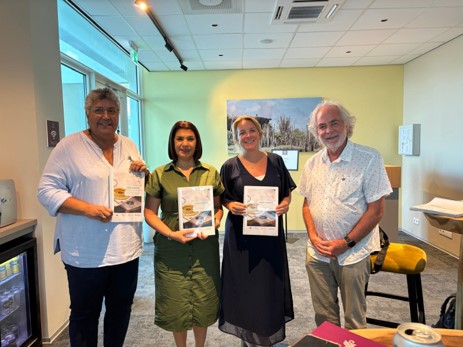
Kralendijk – E miembronan di federashon Dutch Caribbean Mental Health (DCMH) a reuní na Boneiru di 8 te ku 11 di yüni 2026. Durante e bishita di trabou akí, interkambio di konosementu, kolaborashon regional i e resultadonan preliminar di e di dos edishon di Regiobeeld GGZ Caribisch Gebied 2025 tabata sentral. Tambe a entregá e rapòrt di e investigashon GGZ Carib na e miembronan di DCMH.
Kolaborashon reforsá den e región
DCMH ta konsistí di FSMA Respaldo na Aruba, GGz Curaçao, Verslavingskliniek Brasami i PSI Skuchami na Kòrsou, Mental Health Foundation na Sint Maarten i Mental Health Caribbean (MHC) na Boneiru, Sint Eustatius i Saba. Durante e bishita di trabou, e representantenan di e diferente institushonnan di salú mental (GGZ) di e islanan a haña un rekorido na vários departamento di MHC.
Durante un reunion di kontenido riba 9 di yüni di 2026, a presentá i diskutí e resultadonan preliminar di Regiobeeld GGZ Caribisch Gebied 2025. E rapòrt akí ta duna un bista estadístiko di e kantidat di kliente den e sektor di salú mental riba e islanan i di nan kehonan mental mas importante. E miembronan di DCMH a duna feedback riba e resultadonan i a papia ku otro tokante kon por reforsá i garantisá e kolaborashon den region riba tereno di kolekshon di dato aun mas.

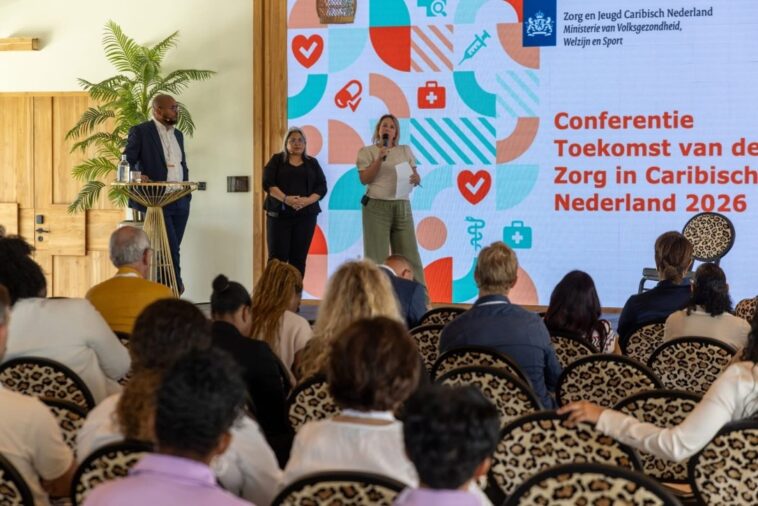
Durante e reunion akí, a entregá tambe e rapòrt GGZ Carib di Curaçao Biomedical and Health Research Institute (CBHRI) na e miembronan di DCMH. E investigashon akí ta brinda informashon balioso tokante e panorama di kuido di salú mental na Kòrsou i Boneiru. Ademas, durante e konferensia di kuido di Zorg en Jeugd Caribisch Nederland (ZJCN), DCMH a duna un presentashon i un tayer.
Bista regional salú mental área karibense
Pa di dos biaha, DCMH ta presentá un bista konhunto di salú mental riba e seis islanan karibense den Reino Hulandes. Durante e konferensia di kuido di ZJCN, a duna un promé bista di e resultadonan di Regiobeeld GGZ Caribisch Gebied 2025.
Pa e bista regional, a kolektá datonan di kasi 10.930 kliente, repartí riba seis isla. E resultadonan ta mustra, entre otro, kua kondishonnan i problema mental ta mas frekuente den e sektor di salú mental den e region.
Trastornonan sikótiko ta esnan ku ta mas frekuente. Esakinan ta kondishonnan kaminda hende por tin difikultat pa distinguí realidat for di nan mes pensamentunan. Por ehèmpel, nan por sufri di delusion òf halusinashon. Despues di esaki ta sigui trastornonan di desaroyo neurobiológiko, manera Attention Deficit Hyperactivity Disorder (ADHD) i autismo. E trastornonan akí hopi biaha ta visibel for di mucha i tin di aber ku e manera ku e cerebro ta desaroyá. Na di tres lugá ta problema sikososial, manera strès pa motibu di problema finansiero, problema na kas òf tenshon den famia.
E bista regional ta yuda e institushonnan di salú mental pa kolaborá mihó i pa koordiná e kuido mas bon ku loke hende mester.
Kolaborashon komo kondishon pa bon kuido
Durante e konferensia di kuido di ZJCN, Caroline Hart di Respaldo i Kathelijne van den Boogert di MHC a duna un presentashon na nòmber di DCMH tokante loke e federashon a logra den e último añanan. E mensahe sentral tabata:
“Kolaborá riba e islanan no ta un eskoho, sino un kondishon pa por brinda bon kuido.”
Ademas, DCMH a duna un tayer tokante kolekshon di dato den e region. Durante esaki, a diskutí kon a logra pa konhuntamente kolektá dato for di diferente sistema riba e diferente islanan i unda e oportunidatnan ta pa mehorá e kalidat di dato i e kontinuidat di e monitòr regional.
Ku e bista regional komun akí, DCMH ta duna un paso importante den hasi e nesesidatnan di kuido den e region mas visibel. Dor di konektá konosementu, sifra i eksperensia ku otro, e institushonnan di salú mental den e parti karibense di Reino Hulandes por sigui traha huntu pa un salú mental adekuá, aksesibel i prepará pa futuro.
FUENTE: DCMH/LIVE99FM

NEDERLAND:
DUTCH CARIBBEAN MENTAL HEALTH FEDERATION ONDERSTREEPT BELANG VAN REGIONALE SAMENWERKING TIJDENS WERKBEZOEK OP BONAIRE
Kralendijk – De leden van de federatie Dutch Caribbean Mental Health (DCMH) kwamen van 8 tot en met 11 juni 2026 bijeen op Bonaire. Tijdens dit werkbezoek stonden kennisuitwisseling, regionale samenwerking en de voorlopige resultaten van de tweede editie van het Regiobeeld GGZ Caribisch Gebied 2025 centraal. Ook werd het rapport van het onderzoek GGZ Carib overhandigd aan de leden van DCMH.
Versterkte samenwerking binnen de regio
DCMH bestaat uit FSMA Respaldo op Aruba, GGz Curaçao, Verslavingskliniek Brasami op Curaçao, PSI Skuchami op Curaçao, Mental Health Foundation op Sint-Maarten en Mental Health Caribbean op Bonaire, Sint-Eustatius en Saba. Tijdens het werkbezoek kregen de vertegenwoordigers van de verschillende GGZ-instellingen van de eilanden een rondleiding langs meerdere afdelingen van MHC.
Tijdens een inhoudelijke bijeenkomst op 9 juni 2026 zijn de voorlopige resultaten van het Regiobeeld GGZ Caribisch Gebied 2025 gepresenteerd en besproken. Dit rapport geeft een cijfermatig overzicht van aantallen cliënten in de GGZ op de eilanden en hun belangrijkste psychische klachten. De leden van DCMH gaven feedback op de uitkomsten en spraken met elkaar over de wijze waarop de samenwerking binnen de regio op het gebied van dataverzameling verder kan worden versterkt en geborgd. Tijdens deze bijeenkomst werd ook het rapport GGZ Carib van het Curaçao Biomedical and Health Research Institute (CBHRI) overhandigd aan de leden van DCMH. Dit onderzoek biedt waardevolle inzichten in het zorglandschap van de geestelijke gezondheidszorg op Curaçao en Bonaire. Daarnaast verzorgde DCMH tijdens de zorgconferentie van Zorg en Jeugd Caribisch Nederland (ZJCN) een presentatie en workshop.
Regiobeeld GGZ Caribisch Gebied
Voor de tweede keer brengt DCMH de geestelijke gezondheidszorg op de zes Caribische eilanden binnen het Koninkrijk der Nederlanden gezamenlijk in beeld. Tijdens de zorgconferentie van ZJCN werd een eerste inkijk gegeven in de resultaten van het Regiobeeld GGZ Caribisch Gebied 2025.
Voor het regiobeeld zijn gegevens verzameld van bijna 10.930 cliënten, verspreid over zes eilanden. De resultaten laten onder andere zien welke psychische aandoeningen en problemen het meest voorkomen binnen de geestelijke gezondheidszorg in de regio.
Psychotische stoornissen komen het vaakst voor. Dit zijn aandoeningen waarbij mensen moeite kunnen hebben om werkelijkheid en gedachten van elkaar te onderscheiden. Zij kunnen bijvoorbeeld last hebben van wanen of hallucinaties. Daarna volgen neurobiologische ontwikkelingsstoornissen, zoals Attention Deficit Hyperactivity Disorder (ADHD) en autisme. Deze stoornissen zijn vaak al op jonge leeftijd zichtbaar en hebben te maken met de manier waarop de hersenen zich ontwikkelen. Op de derde plaats staan psychosociale problemen, zoals stress door geldproblemen, problemen thuis of spanningen binnen het gezin.
Het regiobeeld helpt de GGZ-instellingen om beter samen te werken en de zorg beter af te stemmen op wat mensen nodig hebben.
Samenwerking als voorwaarde voor goede zorg
Tijdens de zorgconferentie van ZJCN gaven Caroline Hart van Respaldo en Kathelijne van den Boogert van MHC namens DCMH een presentatie over wat de federatie de afgelopen jaren heeft bereikt. De centrale boodschap was: “Samenwerken is op de eilanden geen keuze, maar een voorwaarde voor goede zorg.”
Daarnaast gaf DCMH een workshop over het verzamelen van data in de regio. Hierbij werd besproken hoe het is gelukt om op de verschillende eilanden gezamenlijk data te verzamelen uit verschillende systemen en waar de kansen liggen voor verbetering van datakwaliteit en continuïteit van de regiomonitor.
Met het gezamenlijke regiobeeld zet DCMH een belangrijke stap in het zichtbaar maken van de zorgbehoeften binnen de regio. Door kennis, cijfers en ervaringen met elkaar te verbinden, kunnen de GGZ-instellingen binnen het Caribisch deel van het Koninkrijk samen blijven werken aan passende, toegankelijke en toekomstbestendige geestelijke gezondheidszorg.
ENGELS:
DUTCH CARIBBEAN MENTAL HEALTH FEDERATION HIGHLIGHTS THE IMPORTANCE OF REGIONAL COLLABORATION DURING WORKING VISIT TO BONAIRE
Kralendijk – Members of the Dutch Caribbean Mental Health Federation (DCMH) met in Bonaire from 8 to 11 June 2026. During this working visit, knowledge exchange, regional cooperation, and preliminary results of the second edition of the Caribbean Mental Health Regional Overview 2025 were central topics. The findings of the GGZ Carib study were also formally presented to DCMH members.
Strengthening regional collaboration
DCMH consists of FSMA Respaldo in Aruba, GGz Curaçao, Brasami Addiction Clinic in Curaçao, PSI Skuchami in Curaçao, the Mental Health Foundation in Sint Maarten, and Mental Health Caribbean (MHC) in Bonaire, Sint Eustatius, and Saba. During the working visit, representatives of the participating mental health organizations toured several departments of MHC.
During a substantive meeting on 9 June 2026, the preliminary findings of the Caribbean Mental Health Regional Overview 2025 were presented and discussed. The report provides a statistical overview of the number of mental health clients across the islands and their primary mental health concerns. DCMH members provided feedback on the findings and discussed ways to further strengthen and sustain regional cooperation in data collection.
During the same meeting, the GGZ Carib report, conducted by the Curaçao Biomedical and Health Research Institute (CBHRI), was presented to DCMH members. This study offers valuable insights into the mental healthcare landscape of Curaçao and Bonaire. In addition, DCMH delivered a presentation and workshop during the healthcare conference organized by Healthcare and Youth Caribbean Netherlands (ZJCN).
Regional overview of mental health in the Caribbean area
For the second time, DCMH has jointly mapped the state of mental healthcare across the six Caribbean islands within the Kingdom of the Netherlands. During the ZJCN healthcare conference, attendees were given a first look at the results of the Regiobeeld GGZ Caribisch Gebied 2025 (regional overview of mental health in the Caribbean area 2025).
The regional overview is based on data collected from nearly 10,930 clients across six islands. The findings provide insight into the most common mental health disorders and psychosocial challenges within the region’s mental healthcare services.
Psychotic disorders were found to be the most prevalent. These conditions can affect a person’s ability to distinguish between reality and their thoughts and may involve symptoms such as delusions or hallucinations. The second most common category consists of neurodevelopmental disorders, including Attention Deficit Hyperactivity Disorder (ADHD) and autism. These conditions are often evident from an early age and are related to brain development. Psychosocial problems rank third and include issues such as financial stress, difficulties at home, and family-related tensions.
The regional overview helps mental health organizations improve collaboration and better align services with the needs of the population.
Collaboration as a prerequisite for quality care
During the ZJCN healthcare conference, Caroline Hart of Respaldo and Kathelijne van den Boogert of MHC delivered a presentation on behalf of DCMH highlighting the federation’s achievements over recent years. Their key message was:
“On the islands, collaboration is not a choice—it is a prerequisite for providing quality care.”
DCMH also facilitated a workshop on regional data collection. Participants discussed how organizations across the islands successfully collaborated to collect data from different systems and explored opportunities to further improve data quality and ensure the continuity of the regional monitoring framework.
With this joint regional overview, DCMH is taking an important step toward making mental healthcare needs within the region more visible. By connecting knowledge, data, and practical experience, mental health organizations throughout the Caribbean part of the Kingdom can continue working together to provide appropriate, accessible, and future-proof mental healthcare services.
SPANJO:
LA FEDERACIÓN ‘DUTCH CARIBBEAN MENTAL HEALTH’ DESTACA LA IMPORTANCIA DE LA COLABORACIÓN REGIONAL DURANTE VISITA DE TRABAJO EN BONAIRE
Kralendijk – Los miembros de la Federación de Salud Mental del caribe neerlandés (Dutch Caribbean Mental Health – DCMH) se reunieron en Bonaire del 8 al 11 de junio de 2026. Durante esta visita de trabajo, el intercambio de conocimientos, la colaboración regional y los resultados preliminares de la segunda edición del Panorama Regional de la Salud Mental del Caribe 2025 ocuparon un lugar central. Asimismo, se entregó a los miembros de DCMH el informe de la investigación ‘GGz Carib’.
Fortalecimiento de la colaboración dentro de la región
DCMH está integrada por FSMA Respaldo de Aruba, GGz Curaçao, Verslavingskliniek Brasami de Curazao, PSI Skuchami de Curazao, Mental Health Foundation de San Martín y Mental Health Caribbean (MHC) de Bonaire, San Eustaquio y Saba. Durante la visita de trabajo, los representantes de las diferentes instituciones de salud mental de las islas realizaron un recorrido por varios departamentos de MHC.
Durante una reunión de contenido celebrada el 9 de junio de 2026, se presentaron y discutieron los resultados preliminares del Panorama Regional de la Salud Mental del Caribe 2025. Este informe ofrece una visión estadística del número de clientes atendidos por los servicios de salud mental en las islas y de sus principales problemas psicológicos. Los miembros de DCMH aportaron comentarios sobre los resultados y dialogaron sobre las formas de fortalecer y garantizar la colaboración regional en materia de recopilación de datos.
Durante esta reunión también se entregó a los miembros de DCMH el informe ‘GGz Carib’ del Instituto de Investigación Biomédica y de Salud de Curazao) Curaçao Biomedical and Health Research Institute – CBHRI). Esta investigación ofrece valiosos conocimientos sobre el panorama de la atención en salud mental en Curazao y Bonaire. Además, DCMH ofreció una presentación y un taller durante la conferencia de salud organizada por la organización gubernamental de los Países Bajos Atención y Juventud del Caribe Neerlandés (Zorg en Jeugd Caribisch Nederland – ZJCN).
Panorama Regional de la Salud Mental del Caribe
Por segunda vez, DCMH presenta una visión conjunta de la salud mental en las seis islas caribeñas del Reino de los Países Bajos. Durante la conferencia de salud de ZJCN se ofreció un primer vistazo a los resultados del Panorama Regional de la Salud Mental del Caribe 2025.
Para la elaboración de este panorama regional, se recopilaron datos de casi 10.930 clientes, distribuidos en seis islas. Los resultados muestran, entre otras cosas, cuáles son los trastornos y problemas psicológicos más frecuentes dentro de los servicios de salud mental de la región.
Los trastornos psicóticos son los más comunes. Se trata de afecciones en las que las personas pueden tener dificultades para distinguir entre la realidad y sus pensamientos. Por ejemplo, pueden experimentar delirios o alucinaciones. En segundo lugar, se encuentran los trastornos del neurodesarrollo, como el Trastorno por Déficit de Atención e Hiperactividad (TDAH) y el autismo. Estos trastornos suelen manifestarse desde edades tempranas y están relacionados con la forma en que se desarrolla el cerebro.
En tercer lugar, se encuentran los problemas psicosociales, como el estrés causado por dificultades económicas, problemas en el hogar o tensiones dentro de la familia.
El panorama regional ayuda a las instituciones de salud mental a colaborar de manera más efectiva y a adaptar mejor la atención a las necesidades de las personas.
La colaboración como condición para una buena atención
Durante la conferencia de salud de ZJCN, Caroline Hart de Respaldo y Kathelijne van den Boogert de MHC, realizaron una presentación en nombre de DCMH sobre los logros alcanzados por la federación en los últimos años. El mensaje central fue:
“La colaboración en las islas no es una opción, sino un requisito para brindar una atención de calidad.”
Además, DCMH impartió un taller sobre la recopilación de datos en la región. En este espacio se discutió cómo se logró recopilar datos de manera conjunta desde distintos sistemas en las diferentes islas y cuáles son las oportunidades para mejorar la calidad de los datos y la continuidad del monitoreo regional.
Con este panorama regional conjunto, DCMH da un paso importante para visibilizar las necesidades de atención dentro de la región. Al conectar conocimientos, cifras y experiencias, las instituciones de salud mental del Caribe neerlandés pueden seguir trabajando juntas para ofrecer una atención en salud mental adecuada, accesible y preparada para el futuro.




GIPHY App Key not set. Please check settings