
 Redakshon

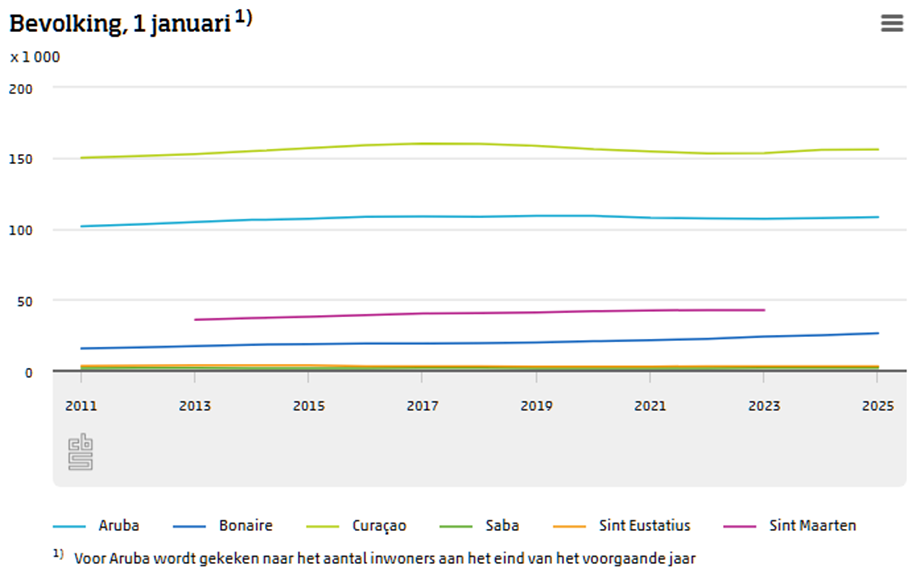
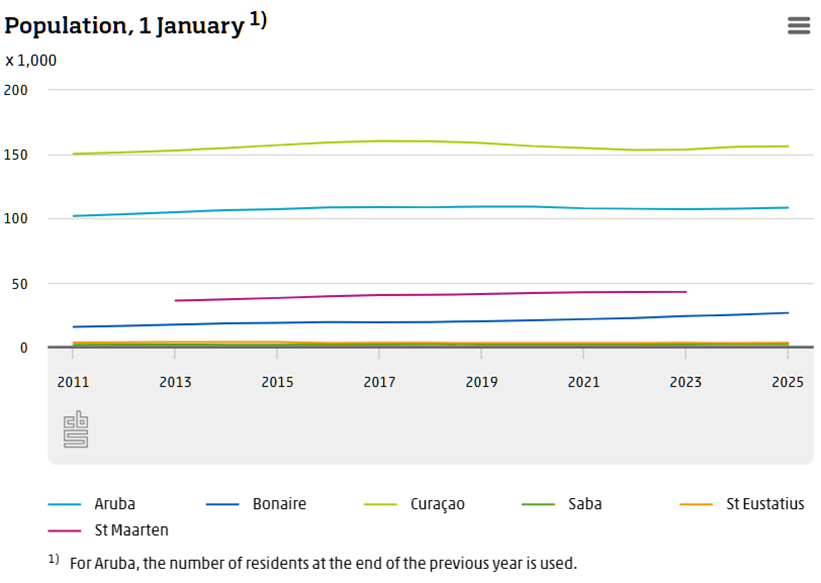
Kralendijk,- Segun e último sifranan, poblashon di e parti Karibense di Reino hulandes ta 8 porshento mas haltu ku na 2011. Partikularmente, e poblashon di Boneiru a oumentá. Komposishon di poblashon riba e islanan tambe a kambia, i e poblashon ta envehesiendo. Desempleo ta mas abou riba tur isla. Esaki CBS ta indiká for di e último sifranan.
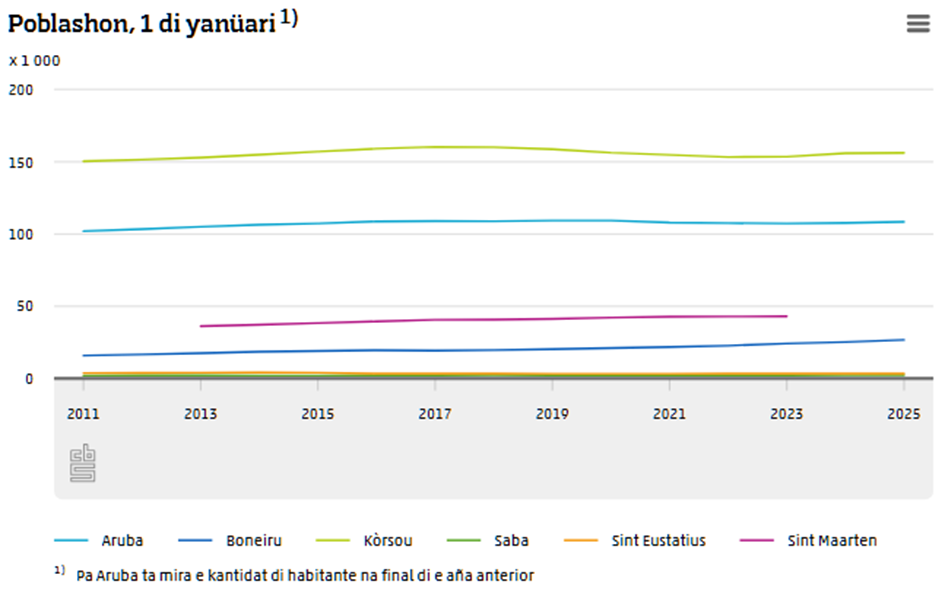
Na 2025, e parti Karibense di Reino tin mas ku 330 mil habitante. Kòrsou ta e isla di mas grandi ku 156 mil habitante, siguí pa Aruba (108 mil habitante). Segun e último sifranan, Sint Maarten tabatin 43 mil habitante na 2023.
Den Hulanda Karibense, Boneiru ta e isla di mas grandi na 2025 (kasi 27 mil habitante), miéntras ku Sint Eustatius i Saba tin riba 3 mil i 2 mil habitante, respektivamente. Partikularmente, Boneiru a konosé un kresementu enorme di kasi 70 porshento. Esaki ta debí prinsipalmente na migrashon.

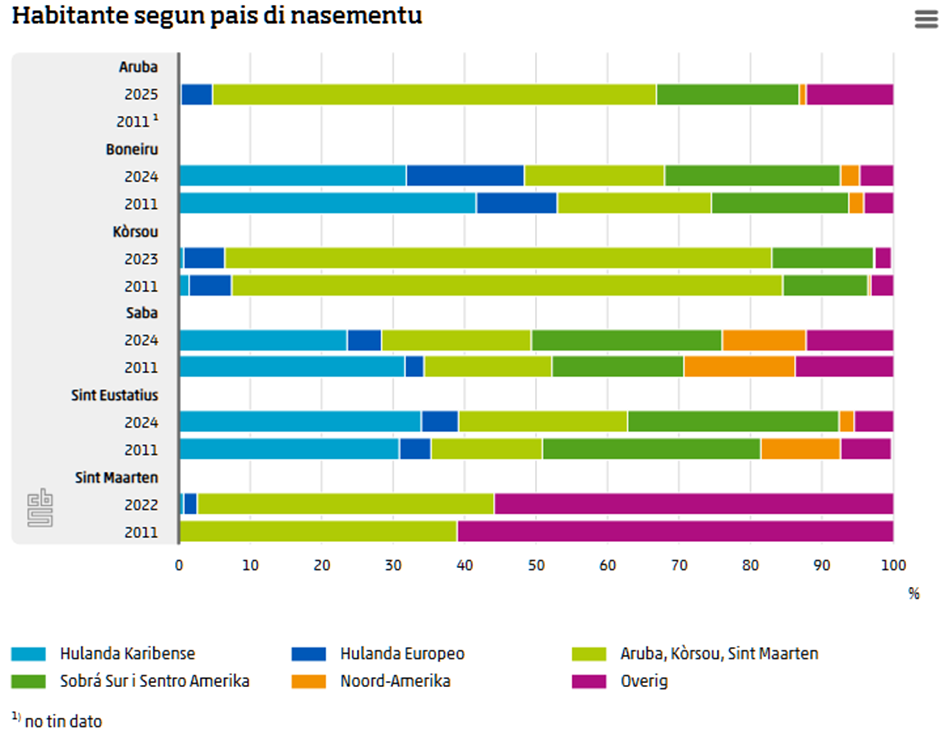
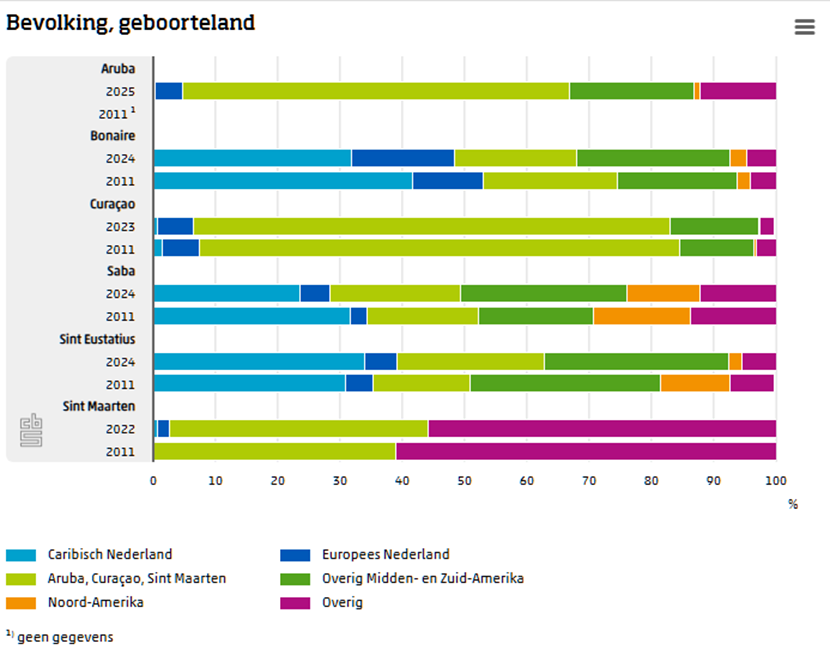
Na Kòrsou i Aruba, e parti di e poblashon ku a nase riba e isla mes, a keda práktikamente meskos, miéntras ku na Sint Maarten, e parti di e residentenan ku a nase riba e isla mes a baha un poko.
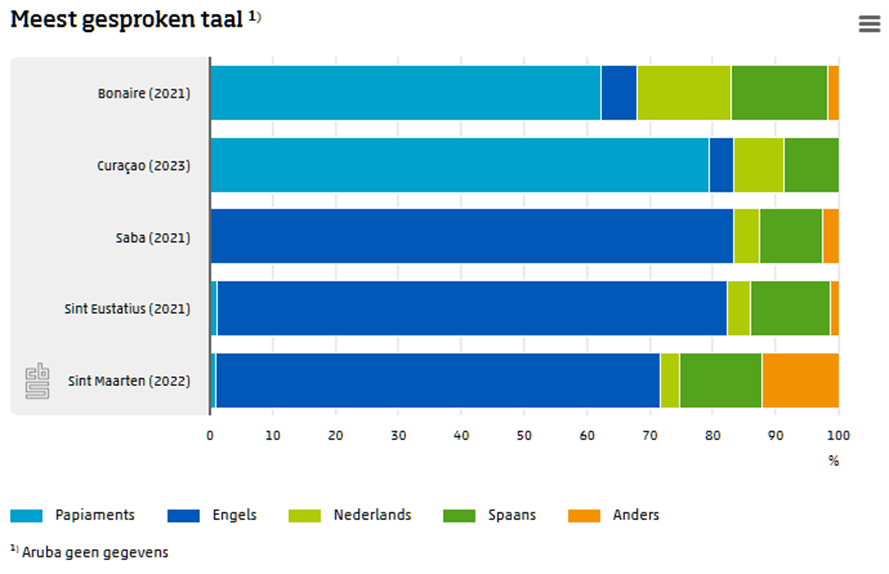
Papiamentu i ingles ta e idiomanan mas papiá
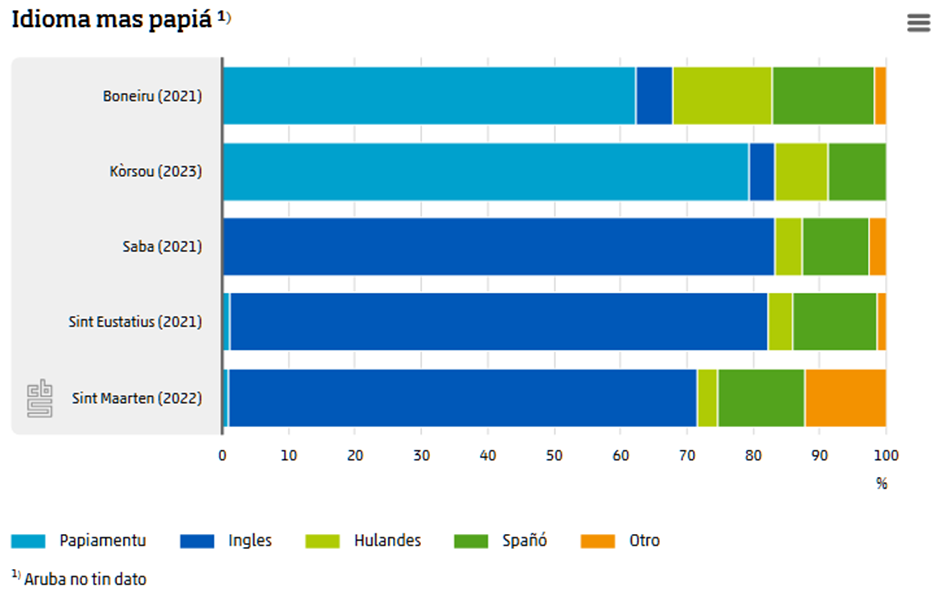
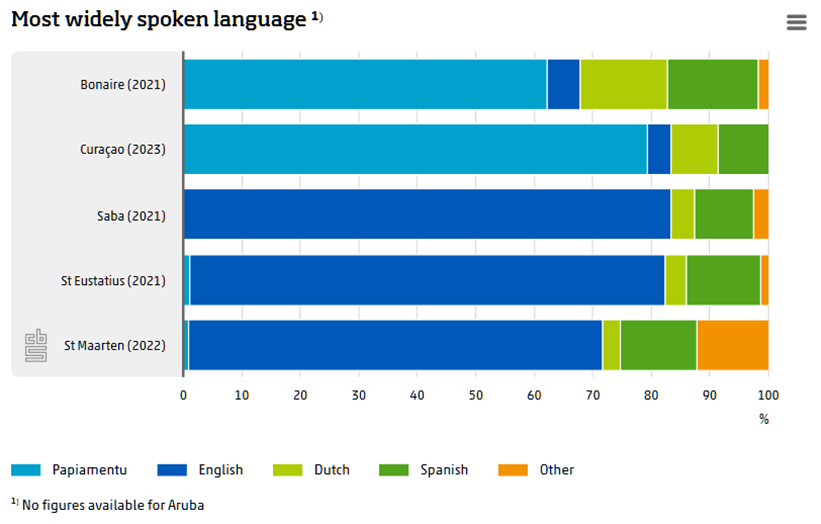
Na Kòrsou, kasi 80 porshento di e poblashon ta papia Papiamentu. Na Boneiru, esaki ta 62 porshento. Na Boneiru tambe ta papia spañó i ingles (tur dos 15 porshento). Na Aruba, Papiamento ta e idioma mas papiá. Papiamento i Papiamentu ta dos variante ofisial di e mesun idioma. Aruba ta usa Papiamento, Boneiru i Kòrsou ta usa Papiamentu. E diferensianan prinsipal ta den ortografia i tin biaha den pronunsiashon.
Na Sint Maarten, Saba, i Sint Eustatius, ingles ta e idioma mas papiá. 83 porshento di e habitantenan di Saba ta papia prinsipalmente ingles. Na Sint Eustatius, esaki ta 81 porshento, i na Sint Maarten, 71 porshento.
Islanan ta envehesé rápidamente
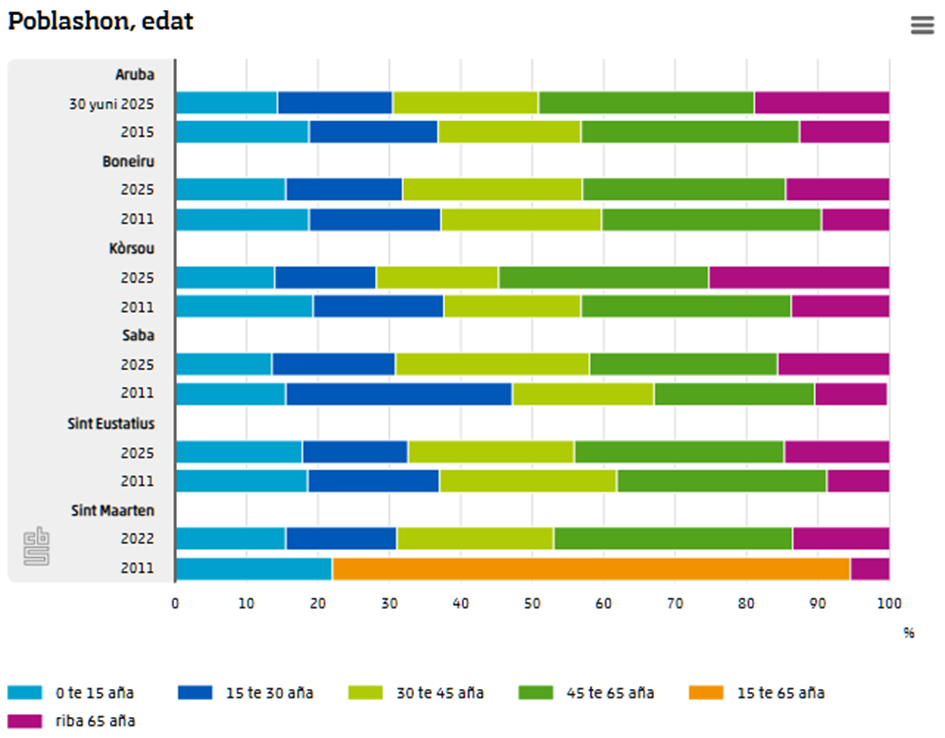
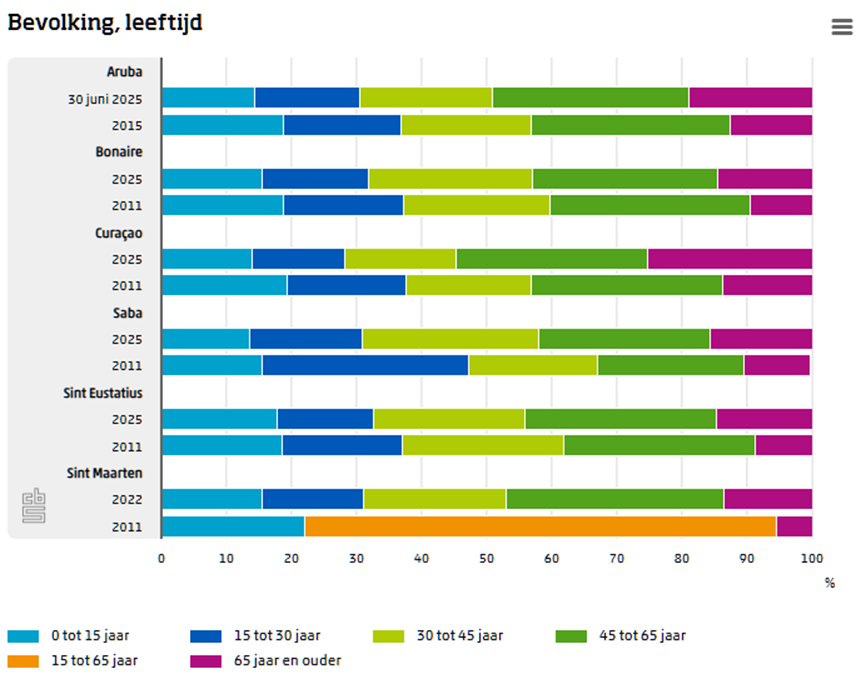
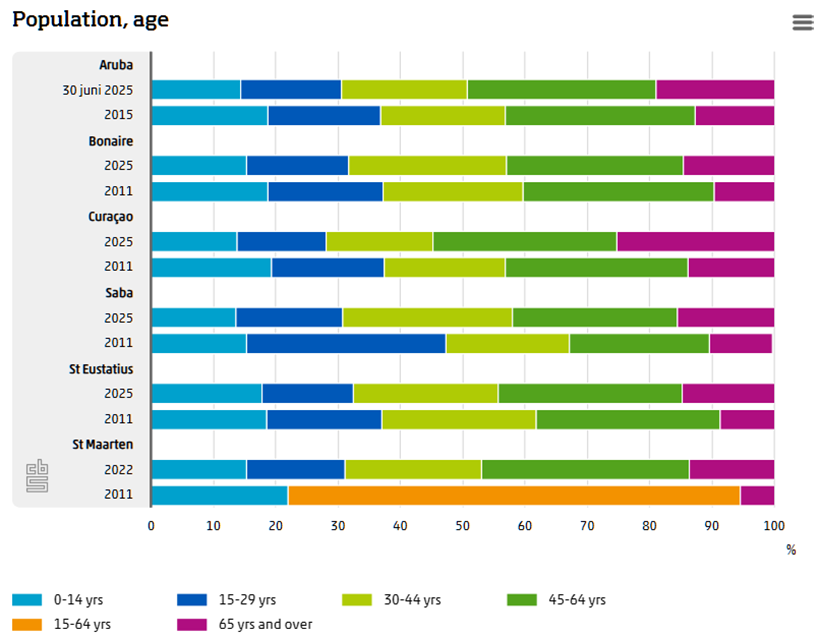
Riba tur isla, envehesimentu di poblashon a oumentá, spesialmente na Kòrsou. Einan, 1 kuart di e poblashon tin 65 aña òf mas. Esaki tabata kasi 14 porshento na 2011. Na Hulanda Karibense, e proporshon di grandinan ta muchu mas abou. Einan, alrededor di 15 porshento di e poblashon tin 65 aña òf mas. Na 2011, esaki tabata mas o ménos 10 porshento.
Komposishon di poblashon a kambia
Na Boneiru, e proporshon di habitante nasé riba e isla aki a baha di 42 porshento na 2011, pa 30 porshento na 2025. E proporshon di habitante nasé na Hulanda Oropeo a oumentá di 11 porshento pa 17 porshento, i e proporshon di habitante nasé na Sur i Sentro Amérika a oumentá di 19 porshento pa 25 porshento.
Na Saba, e proporshon di habitante ku a nase einan a baha di 31 porshento pa 22 porshento, miéntras ku e kantidat di habitante di Sur i Sentro Amérika ta oumentá. Sint Eustatius ta mustra un oumento leve di mas ku 3 porshento di e habitantenan ku a nase einan.
Desempleo mas abou riba mayoria isla
Na Kòrsou , desempleo a baha di 13 porshento na 201,4 te 8 porshento na 2024. Na Aruba, desempleo a baha entre 2016 i 2024 (di 8 porshento pa 4 porshento). Na 2024, desempleo na Boneiru tabata 2 porshento, kompará ku 6 porshento na 2012.
Na Sint Eustatius, desempleo a subi di 3 porshento na 2012 pa 4 porshento na 2024. Saba tin e tasa di desempleo mas abou, na 1 porshento.
Preis a oumentá mas na Kòrsou
Na 2024, preis na Kòrsou tabata 37 porshento mas haltu ku na 2011. Na Aruba, preis a oumentá ménos, na 13 porshento. Inflashon ta fluktua alrededor di 2 porshento anualmente na mayoria isla, kaminda 2022 ta un eksepshon kla.
Na tur isla den e parti Karibense di Reino hulandes, inflashon tabata muchu mas haltu na 2022: di kasi 4 porshento na Sint Maarten pa 10 porshento na Boneiru.
Rekurso:
Publikashon – De Nederlandse Caraïben vijftien jaar na de staatskundige hervorming | CBS:
https://www.cbs.nl/nl-nl/longread/diversen/2025/de-nederlandse-caraiben-vijftien-jaar-na-de-staatskundige-hervorming
FUENTE: CBS/LIVE99FM
NEDERLANDS:
BEVOLKING NEDERLANDSE CARAÏBEN IN VIJFTIEN JAAR GEGROEID
Kralendijk,- Volgens de laatste cijfers is aantal inwoners van het Caribisch deel van het Koninkrijk der Nederlanden 8 procent hoger dan in 2011. Vooral de bevolking van Bonaire is toegenomen. Ook is de samenstelling van de bevolking op de eilanden veranderd en neemt de vergrijzing toe. De werkloosheid is op alle eilanden lager. Dit blijkt uit de laatste cijfers van het Centraal Bureau voor de Statistiek (CBS).
In 2025 telt het Caribisch deel van het Koninkrijk ruim 330 duizend inwoners. Curaçao is met 156 duizend inwoners het grootste eiland, gevolgd door Aruba (108 duizend). Sint Maarten telde in 2023 volgens de laatste cijfers 43 duizend inwoners.
In Caribisch Nederland is Bonaire in 2025 veruit het grootste eiland (bijna 27 duizend inwoners), terwijl Sint Eustatius en Saba respectievelijk ruim 3 duizend en 2 duizend inwoners tellen. Vooral Bonaire heeft een enorme groei doorgemaakt van bijna 70 procent. Dat komt vooral door migratie.
Op Curaçao en Aruba is het deel van de bevolking dat daar geboren is vrijwel gelijk gebleven, terwijl op Sint Maarten het aandeel op dat eiland geboren inwoners licht afneemt.
Papiaments en Engels het meest gesproken
Op Curaçao spreekt bijna 80 procent van de bevolking Papiaments. Op Bonaire is dat 62 procent. Op Bonaire wordt daarnaast ook Spaans en Engels gesproken (beide 15 procent). Op Aruba wordt het Papiamento het meest gesproken. Papiaments en Papiamento zijn twee officiële varianten van dezelfde taal. Aruba gebruikt Papiamento, Bonaire en Curaçao gebruiken Papiaments/Papiamentu. Het grootste verschil zit in spelling en soms uitspraak.
Op Sint Maarten, Saba en Sint Eustatius is Engels de meest gesproken taal. 83 procent van de inwoners van Saba spreekt vooral Engels. Op Sint Eustatius is dat 81 procent en op Sint Maarten 71 procent.
Eilanden vergrijzen snel
Op alle eilanden is de vergrijzing toegenomen, vooral op Curaçao. Daar is een kwart van de bevolking 65 jaar of ouder. Dit was bijna 14 procent in 2011. In Caribisch Nederland is het aandeel senioren veel lager. Daar is rond 15 procent van de bevolking 65 jaar of ouder. In 2011 was dat ongeveer 10 procent.
Bevolkingssamenstelling gewijzigd
Op Bonaire daalde het aandeel op dat eiland geboren inwoners van 42 procent in 2011 naar 30 procent in 2025. Het aandeel geboren in Europees Nederland steeg van 11 procent naar 17 procent, en het aandeel inwoners met een geboorteland in Zuid- en Midden-Amerika nam toe van 19 procent naar 26 procent.
Op Saba is het aandeel daar geboren inwoners gedaald van 31 procent naar 22 procent, terwijl het aantal inwoners uit Zuid- en Midden-Amerika stijgt. Sint Eustatius laat een lichte stijging zien van ruim 3 procent daar geboren inwoners.
Werkloosheid op meeste eilanden lager
Op Curaçao is de werkloosheid gedaald van 13 procent in 2014 naar 8 procent in 2024. Op Aruba nam de werkloosheid tussen 2016 en 2024 af (van 8 procent naar 4 procent). In 2024 was de werkloosheid op Bonaire 2 procent terwijl dit in 2012 nog 6 procent was.
Op Sint Eustatius is de werkloosheid gestegen, van 3 procent in 2012 naar 4 procent in 2024. Op Saba is de werkloosheid het laagst, namelijk 1 procent.
Prijzen meeste gestegen op Curaçao
In 2024 waren de prijzen op Curaçao 37 procent hoger dan in 2011. Op Aruba zijn de prijzen met 13 procent het minst gestegen. De inflatie schommelt voor de meeste eilanden jaarlijks rond de 2 procent met als duidelijke uitschieter het jaar 2022.
Op alle eilanden in het Caribisch deel van het Koninkrijk der Nederlanden was de inflatie in 2022 veel hoger: van bijna 4 procent op Sint Maarten tot 10 procent op Bonaire.
Bron:
Publicatie – De Nederlandse Caraïben vijftien jaar na de staatskundige hervorming | CBS: https://www.cbs.nl/nl-nl/longread/diversen/2025/de-nederlandse-caraiben-vijftien-jaar-na-de-staatskundige-hervorming
ENGELS:
POPULATION OF THE DUTCH CARIBBEAN HAS GROWN OVER FIFTEEN YEARS
Kralendijk,- According to the latest figures, the population of the Caribbean part of the Kingdom of the Netherlands has increased by 8 percent since 2011. The population of Bonaire has grown in particular. In addition, the composition of the population on the islands has changed and the population is ageing more rapidly. Unemployment is lower on all islands, however. This is according to the most recent figures from Statistics Netherlands (CBS).
The Caribbean part of the Kingdom has more than 330 thousand inhabitants in 2025. Curaçao has the largest population of any of the islands with 156 thousand residents, followed by Aruba with 108 thousand. St Maarten had a population of 43 thousand in 2023, according to the latest figures.
In 2025, Bonaire is the island with the largest population of the Caribbean Netherlands by far (almost 27 thousand residents), while St Eustatius and Saba have a population of over 3 thousand and 2 thousand, respectively. Bonaire in particular has experienced tremendous growth of nearly 70 percent, mainly due to migration.
Papiamentu and English spoken the most widely
On Curaçao, 80 percent of the population speaks Papiamentu. On Bonaire, the share is 62 percent. Spanish and English are also spoken on Bonaire (both at 15 percent). On Aruba, however, Papiamento is the most widely spoken language. Papiamentu and Papiamento are two variants of the same language: the main difference between them are spelling and sometimes pronunciation.
English is the most widely spoken language on St Maarten, Saba and St Eustatius. On Saba, 83 percent of residents speak English. On St Eustatius, the share is 81 percent and on St Maarten it is 71 percent.
Rapidly ageing population
The population of all the islands is ageing more rapidly, particularly Curaçao. A quarter of its population is now aged 65 years or older. In 2011, this was under 14 percent. In the Caribbean Netherlands, the number of seniors is much lower: around 15 percent of the population is aged 65 years or older. In 2011, the share was 10 percent.
The composition of the population has changed
On Bonaire, the share of residents born on the island fell from 42 percent in 2011 to 30 percent in 2025. The share of residents born in the European Netherlands rose from 11 percent to 17 percent, and the share of residents born in South and Central America increased from 19 percent to 26 percent.
On Saba, the share of residents born on the island decreased from 31 percent to 22 percent, while the number of residents originating from South and Central America is rising. On St Eustatius the share of residents born on the island is up by over 3 percent.
On Curaçao and Aruba, the share of the population born on the island has remained almost the same, while on St Maarten, the share has decreased slightly.
Unemployment lower on most islands
Unemployment on Curaçao was down from 13 percent in 2014 to 8 percent in 2024. A fall in unemployment was also seen on Aruba between 2016 and 2024 (from 8 percent to 4 percent). The unemployment rate on Bonaire was 2 percent in 2024 compared to 6 percent in 2012.
Unemployment rose on St Eustatius, from 3 percent in 2012 to 4 percent in 2024. Saba has the lowest unemployment rate at 1 percent.
Prices rose by the most on Curaçao
In 2024, prices on Curaçao were up by 37 percent compared with 2011. Prices on Aruba rose by the least, at 13 percent. Inflation is generally at around 2 percent annually for most of the islands, but the year 2022 was an exception.
Inflation was elevated on all islands in the Caribbean part of the Kingdom of the Netherlands in 2022: from nearly 4 percent on St Maarten to 10 percent on Bonaire.
Source:
Publication – The Dutch Caribbean fifteen years after state reform | CBS:
https://www.cbs.nl/nl-nl/longread/diversen/2025/de-nederlandse-caraiben-vijftien-jaar-na-de-staatskundige-hervorming



GIPHY App Key not set. Please check settings