
 Redakshon
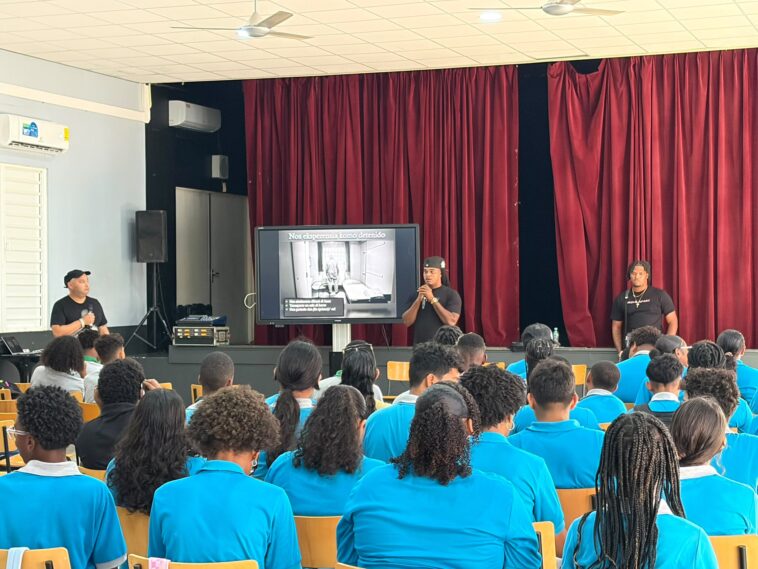
Kralendijk,- Mas di 300 hóben na Boneiru a partisipá djamars 25 di ougùstùs 2026 na For di Gara 2.0, un tayer tokante influensia i eksplotashon kriminal. Nan a deskubrí kon un hende por haña mas i mas influensia riba bo paso pa paso, i kon importante ta pa rekonosé na tempu ku algu no ta korekto. Tres eksperto di eksperensia propio a kompartí nan historia personal i a papia ku e hóbennan tokante eskoho, konsekuensia i e influensia di nan ambiente.
Eksplotashon kriminal no semper ta kuminsá ku algu ku ta sinti malu mesora. E por kuminsá ku un rekompensa, atenshon èkstra, e deseo pa pertenesé na un grupo, mester tene algu sekreto òf preshon pa disidí lihé. P’esei ta importante pa hóbennan siña rekonosé e diferente formanan di influensia aki.
Durante e tayer tabatin kuater forma sentral: rekompensa, atenshon i pertenesé na un grupo, sekresia i preshon di tempu. Ku ehèmpelnan rekonosibel, e hóbennan a papia tokante esaki ku e ekspertonan di eksperensia propio.

Storianan personal ta hasi e konsekuensianan visibel
E tres ekspertonan di eksperensia propio a papia ku e hóbennan for di nan mes eksperensia. Nan a konta tokante e influensia di amigunan i nan ambiente, e deseo pa pertenesé, eskoho robes i e konsekuensianan di esakinan. Tambe a bini e pregunta dilanti: ken ta bo amigunan i kon nan ta influensiá e eskoho ku bo ta hasi?
Tambe nan a papia tokante loke eskoho robes por nifiká despues pa skol, trabou i oportunidatnan den futuro. Un di e ekspertonan di eksperensia propio a yama un deklarashon di bon kondukta (Verklaring Omtrent het Gedrag) (VOG) asta “bo di dos diploma”. Pa sierto estudio, stage i trabou bo mester di un VOG. Si bo a bini den kontakto ku hustisia, esaki por hunga un papel despues ora bo mester di un VOG.
E kombersashonnan no tabata solamente tokante loke por bai robes. E ekspertonan di eksperensia propio tambe a enfatisá ku hóbennan mes tin influensia riba e rumbo ku nan bida ta bai. Tambe si bo a hasi eskoho robes, bo por skohe un otro direkshon.
Un di e ekspertonan di eksperensia propio a ekspresá esaki asina:
“Al final abo mes ta esun ku ta motivá bo mes positivamente òf negativamente. Mi tin un yu di 9 luna. Boso ta e futuro. Kisas un di boso lo ta su maestro, su coach òf un otro hende ku lo hunga un papel importante den su bida. E eskoho ku boso ta hasi awor ta konta.”
E ta korekto?
Un mensahe importante ku e hóbennan a haña ta pa no sigui otro outomátikamente ora un hende pidi nan hasi algu.
Nan ta ofresé bo algu? Bo mester tene algu sekreto? Bo ta sinti preshon pa disidí lihé? Para ketu un ratu i puntra bo mes: Esaki ta korekto?
Si algu no ta sinti bon, para. Pensa. Papia ku un hende ku bo ta konfia.
Traha huntu pa konsientisashon
For di Gara 2.0 ta parti di e programa anual tokante Trafikashon- i kontrabanda di hende na Hulanda Karibense. Dentro di e enfoke aki, Ministerio di Hustisia i Seguridat, RIECCN, IND Hulanda Karibense, JICN, KPCN i e skolnan di enseñansa sekundario ta traha huntu pa prevení i rekonosé eksplotashon.
Ku ‘For di Gara’ ta pone atenshon riba eksplotashon kriminal bou di hóbennan. No ta solamente hóbennan tin un papel den esaki. Mayornan, skolnan i otro hendenan den nan ambiente por yuda tambe pa medio di rekonosé señalnan i papia tokante nan.
Bo ta pensa ku abo òf un hende ku bo konosé tin di haber ku eksplotashon kriminal? Papia ku un hende ku bo ta konfia. Semper tin un salida.
Mas informashon: http://www.rijksdienstcn.com/Fordigara
FUENTE: RCN/LIVE99FM
NEDERLAND:
UIT DE GREEP 2.0 ZET RUIM 300 JONGEREN AAN HET DENKEN: KLOPT HET WEL?
Kralendijk,- Ruim 300 jongeren op Bonaire namen dinsdag 25 augustus 2026 deel aan Uit de Greep 2.0, een workshop over beïnvloeding en criminele uitbuiting. Ze ontdekte hoe iemand stap voor stap invloed op hen kan krijgen en welke signalen erop kunnen wijzen dat er iets niet klopt. Drie ervaringsdeskundigen deelden hun persoonlijke verhalen en gingen met de jongeren in gesprek over keuzes, gevolgen en de invloed van hun omgeving.
Criminele uitbuiting begint niet altijd met iets dat meteen verkeerd voelt. Het kan beginnen met een beloning, extra aandacht, de wens om ergens bij te horen, iets geheim moeten houden of de druk om snel te beslissen. Juist daarom is het belangrijk dat jongeren deze vormen van beïnvloeding leren herkennen.
Tijdens de workshop stonden vier vormen centraal: beloning, aandacht en erbij horen, geheimhouding en tijdsdruk. Aan de hand van herkenbare situaties gingen de jongeren hierover met de ervaringsdeskundigen in gesprek.
Persoonlijke verhalen maken gevolgen zichtbaar
De drie ervaringsdeskundigen spraken ieder vanuit hun eigen ervaringen met de jongeren. Ze vertelden over de invloed van vrienden en hun omgeving, de wens om erbij te horen, verkeerde keuzes en de gevolgen daarvan. Daarbij kwam ook de vraag aan bod: wie zijn je vrienden en welke invloed hebben zij op de keuzes die je maakt?
Ook bespraken zij wat verkeerde keuzes later kunnen betekenen voor school, werk en kansen in de toekomst. Eén van de ervaringsdeskundigen noemde een Verklaring Omtrent het Gedrag (VOG) zelfs “je tweede diploma”. Voor sommige opleidingen, stages en banen heb je een VOG nodig. Als je met justitie in aanraking komt, kan dat later meespelen bij het krijgen van een VOG.
De gesprekken gingen niet alleen over wat er mis kan gaan. De ervaringsdeskundigen benadrukten ook dat jongeren zelf invloed hebben op de richting die hun leven opgaat. Afstand nemen, hulp vragen en opnieuw kiezen kunnen een verschil maken.
Een van de ervaringsdeskundigen verwoordde dat als volgt:
“Uiteindelijk ben jij degene die jezelf positief of negatief motiveert. Ik heb een kind van negen maanden. Jullie zijn de toekomst. Misschien is één van jullie later wel zijn leraar, zijn coach of iemand anders die een belangrijke rol in zijn leven speelt. De keuzes die jullie nu maken, doen ertoe.”
Klopt het wel?
Een belangrijke boodschap die de jongeren meekregen, was om niet automatisch mee te gaan wanneer iemand iets van hen vraagt.
Krijg je iets aangeboden? Moet je iets geheimhouden? Voel je druk om snel te beslissen? Sta dan even stil en vraag jezelf af: klopt het wel?
Voelt iets niet goed? Stop. Denk na. Praat met iemand die je vertrouwt.
Samen werken aan bewustwording
Uit de Greep 2.0 is onderdeel van het jaarprogramma rond mensenhandel en mensensmokkel in Caribisch Nederland. Binnen deze aanpak werken het ministerie van Justitie en Veiligheid, RIEC Caribisch Nederland, IND Caribisch Nederland, JICN, KPCN en de scholen voor voortgezet onderwijs samen aan het voorkomen en herkennen van uitbuiting.
Met Uit de Greep wordt aandacht gevraagd voor criminele uitbuiting onder jongeren. Niet alleen jongeren hebben daarin een rol. Ook ouders, scholen en andere mensen in hun omgeving kunnen helpen door signalen te herkennen en het gesprek aan te gaan.
Denk je dat jij of iemand die je kent te maken heeft met criminele uitbuiting? Praat met iemand die je vertrouwt. Er is altijd een uitweg.
Meer informatie: www.rijksdienstcn.com/Uitdegreep
ENGELS:
OUT OF THE GRIP 2.0 GETS MORE THAN 300 YOUNG PEOPLE THINKING: DOES THIS FEEL RIGHT?
Kralendijk,- More than 300 young people on Bonaire took part in Out of the Grip 2.0 on Tuesday 25 August 2026, a workshop about influence and criminal exploitation. They discovered how someone can gradually gain influence over them and how important it is to recognize early when something does not feel right. Three experts by experience shared their personal stories and spoke with the young people about choices, consequences and the influence of the people around them.
Criminal exploitation does not always start with something that immediately feels wrong. It can begin with a reward, extra attention, wanting to belong, being asked to keep something secret or being pressured to make a quick decision. That is why it is important for young people to learn how to recognize these forms of influence.
The workshop focused on four forms of influence: rewards, attention and belonging, secrecy and time pressure. Using situations they could recognize, the young people discussed these topics with the experts by experience.
Personal stories make the consequences real
The three experts by experience each spoke to the young people from their own personal experience. They talked about the influence of friends and the people around them, wanting to belong, making the wrong choices and the consequences that can follow. An important question that was also discussed was: who are your friends, and how do they influence the choices you make?
They also discussed what wrong choices can mean later in life for school, work and future opportunities. One of the experts by experience even described a Certificate of Conduct (VOG) as “your second diploma”. A VOG is required for some courses, internships and jobs. If you come into contact with the justice system, this can later play a role when applying for a VOG.
The conversations were not only about what could go wrong. The experts by experience, also stressed that young people could influence the direction their own lives take. Even if you have made wrong choices, you can still choose a different path.
One of the experts by experience put it this way:
“In the end, you are the person who motivates yourself positively or negatively. I have a nine-month-old child. You are the future. Maybe one of
you will later be his teacher, his coach or someone else who plays an important role in his life. The choices you make now, matter.”
Does this feel right?
An important message for young people was not to automatically go along with something just because someone asks them to.
Are you being offered something? Are you being asked to keep something secret? Do you feel pressured to decide quickly? Stop for a moment and ask yourself: does this feel right?
If something does not feel right, stop. Think. Talk to someone you trust.
Working together to raise awareness
Out of the Grip 2.0 is part of the annual programme on human trafficking and human smuggling in the Caribbean Netherlands. As part of this approach, the Ministry of Justice and Security, RIECCN, IND, JICN, KPCN and secondary schools work together to prevent and recognize exploitation.
Out of the Grip raises awareness of criminal exploitation among young people. Young people are not the only ones with a role to play. Parents, schools and other people around them can also help by recognizing the signs and starting the conversation.
Do you think you or someone you know may be experiencing criminal exploitation? Talk to someone you trust. There is always a way out.
More information: www.rijksdienstcn.com/Outofthegrip


GIPHY App Key not set. Please check settings