
 Redakshon
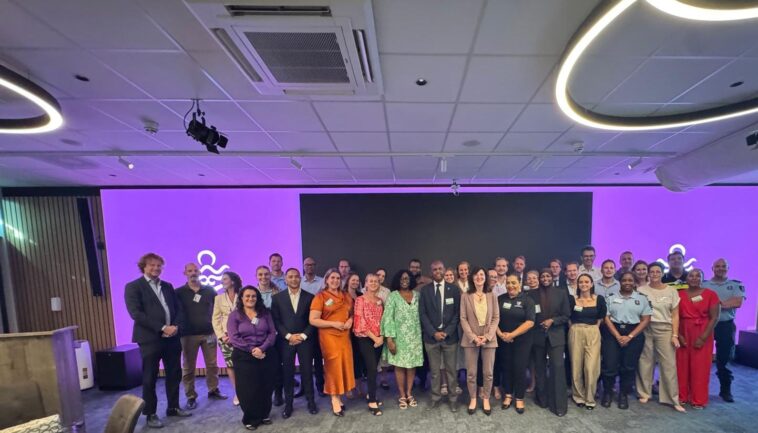
Kralendijk,- Kon por tradusí maneho den resultado visibel den praktiká? E pregunta ei tabata sentral durante e mini konferensia titulá “E kadena di estranhero Hulanda Karibense: Huntu riba kaminda”, ku a tuma lugá dia 23 di òktober na Boneiru.
E aña aki na Boneiru, Entidat Públiko Boneiru, IND CN i direktorado di maneho di Migrashon di ministerio di Asilo i Migrashon a organisá e mini konferensia anual di e kadena di estranhero na Hulanda Karibense.

Durante e konferensia, transishon di vishon i maneho pa ehekushon riba tereno di migrashon, di supervishon na frontera i prosesonan di regreso di estranhero tabata central. Partisipantenan for di e kadena di estranhero na Hulanda Karibense, huntu ku trahadónan di maneho i entidatnan públiko di Boneiru, Sint Eustatius i Saba, konhuntamente a investigá kon por fortifiká e supervishon na frontera, ki medida mester tuma pa tene migrashon den balansa ku e kapasidat di sosiedat, i kon por organisá e proseso di regreso di manera humano i efektivo.
Tambe tabatin atenshon pa kolaborashon den situashon eksepshonal, por ehèmpel den kaso ku tin un entrada masal di migrantenan. Den seshonnan di trabou pa kada isla, e partisipantenan a traha riba senario di emergensia.
Asina e trabou no ta keda solamente na nivel di maneho, pero tambe akuerdonan operashonal práktiko ku ta fortifiká e resiliensia i kapasidat di e islanan. Ku esaki e mini konferensia a ofresé mas ku djis klaridat riba kontenido.
Tabata un un momentu konkreto di konekshon entre maneho i ehekushon i un paso huntu den direkshon di un maneho di migrashon duradero pa Hulanda Karibense
FUENTE: RCN/OLB/LIVE99FM
NEDERLAND:
SAMEN VERDER BOUWEN AAN EEN TOEKOMSTBESTENDIGE VREEMDELINGENKETEN IN CARIBISCH NEDERLAND
Kralendijk,- Hoe vertaal je beleid naar zichtbare resultaten in de praktijk? Die vraag stond centraal tijdens de miniconferentie “De vreemdelingenketen Caribisch Nederland: Samen onderweg”, die op 23 oktober plaatsvond op Bonaire.
De jaarlijkse miniconferentie vreemdelingenketen in Caribisch Nederland werd dit jaar georganiseerd op Bonaire door het Openbaar Lichaam Bonaire, IND CN en de directie Migratiebeleid van het ministerie van Asiel en Migratie.
Tijdens de conferentie stond de overgang van visie en beleid naar uitvoering op het terrein van migratie, grenstoezicht en vreemdelingen terugkeer processen centraal. De deelnemers van de vreemdelingenketen in Caribisch Nederland, beleidsmakers en de openbare lichamen van Bonaire, Sint Eustatius en Saba onderzochten gezamenlijk hoe het grenstoezicht verder kan worden versterkt, welke maatregelen nodig zijn om migratie in balans te houden met de draagkracht van de samenleving en hoe terugkeertrajecten humaan én efficiënt kunnen worden ingericht.
Ook was er aandacht voor samenwerking in uitzonderlijke situaties in het geval er sprake is van een bovenmatige hoge instroom van migranten. In werksessies per eiland werkten de deelnemers aan noodscenario’s. Zo wordt niet alleen gewerkt aan beleid, maar ook aan praktische operationele afspraken die de weerbaarheid en slagkracht van de eilanden versterken.
De miniconferentie bood daarmee meer dan alleen inhoudelijke verdieping. Het was een concreet moment van verbinding tussen beleid en uitvoering en een gezamenlijke stap richting een toekomstbestendig migratiebeleid in Caribisch Nederland.
ENGELS:
BUILDING TOGETHER TOWARD A FUTURE-PROOF MIGRATION CHAIN IN THE CARIBBEAN NETHERLANDS
Kralendijk,- How do you translate policy into visible results in practice? That question was central during the mini-conference “The Caribbean Netherlands Migration Chain: On the Road Together,” which took place on Bonaire on October 23.
This year’s annual mini-conference on the migration chain in the Caribbean Netherlands was organised on Bonaire by the Public Entity Bonaire, IND CN, and the Directorate for Migration Policy of the Ministry of Asylum and Migration.
During the conference, the transition from vision and policy to implementation in the areas of migration, border control, and return processes for foreign nationals was the central theme. Participants from the migration chain in the Caribbean Netherlands, policymakers, and the public entities of the Bonaire, St. Eustatius and Saba jointly explored how border control can be further strengthened, what measures are needed to keep migration in balance with the capacity of society, and how return procedures can be arranged in a humane and efficient way.
There was also attention for cooperation in exceptional circumstances, such as in the event of a disproportionately high influx of migrants. In working sessions per island, participants developed emergency scenarios. This approach ensures that work is done not only on policy, but also on practical and operational agreements that strengthen the islands’ resilience and response capacity.
Thus, the mini-conference offered more than just substantive depth. It provided a tangible moment of connection between policy and practice and a joint step toward a sustainable and future-proof migration policy in the Caribbean Netherlands.




GIPHY App Key not set. Please check settings