
 Redakshon
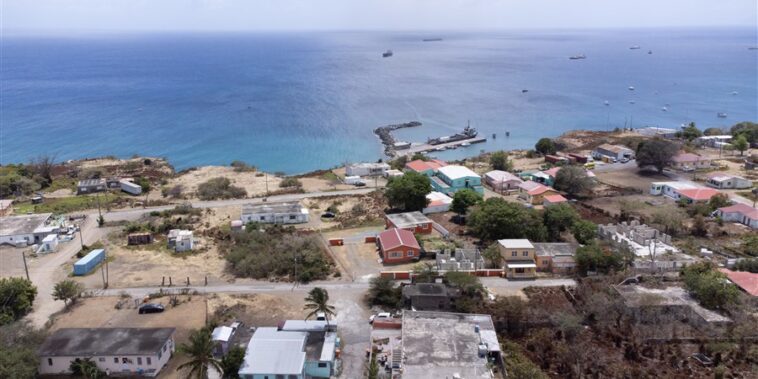
Prosperidat material na Hulanda Karibense a mehorá riba vários tereno. Satisfakshon ku propio situashon finansiero a keda stabil. Na Saba, habitantenan ta ménos satisfecho ku nan tempu liber i bibienda i ta eksperensiá molèster den nan bario mas frekuente.
Na Boneiru i Saba, entrada disponibel a subi durante e último ocho aña. Na Sint Eustatius, pobresa a baha i ménos hende tin difikultat pa yega na nan pan di kada dia. Desigualdat di entrada na Saba i Sint Eustatius tambe a baha. Adishonalmente, mayoria habitante di Hulanda Karibense ta satisfecho ku nan bida. Habitantenan di Saba ta ménos satisfecho ku nan tempu liber i bibienda i ta eksperensiá molèster di bario mas frekuentemente. Esaki ta Sali na kla for di CBS su Monitoreo di bienestar amplio Hulanda Karibense 2026 (Monitor Brede Welvaart Caribisch Nederland 2026).
Bienestar amplio ta konserní tur loke ta importante pa kalidat di bida di hende, manera salú, trabou i tempu liber, entrada, bibienda i seguridat. E monitòr pa Hulanda Karibense ta kontené sifranan riba kalidat di bida ‘aki i awor’ i diesun di e 17 Metanan di Desaroyo Duradero (SDGs).

Ménos difikultat pa yega fin di luna i ménos pobresa na Sint Eustatius
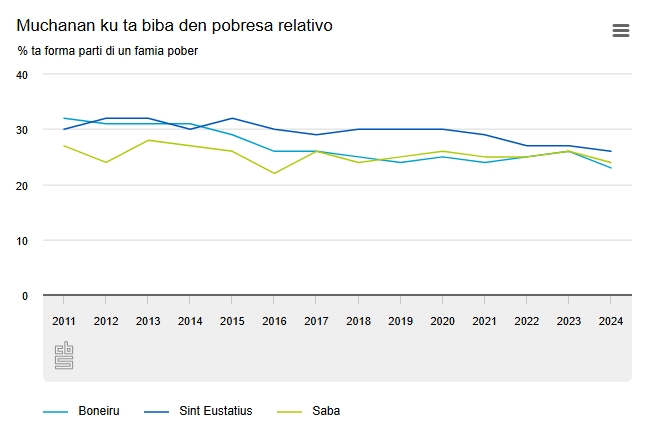
Na 2024, pobresa relativo na Hulanda Karibense a fluktua entre 19 i 23 porshento. Na Hulanda Oropeo, esaki tabata 12 porshento. Pobresa ta bahando na Sint Eustatius. Entre 2018 i 2024, pobresa relativo, e défisit di entrada, i e proporshon di muchanan ku ta biba den pobresa relativo tur a baha einan. Durante e mesun periodo e entrada mediano a subi na Boneiru i Saba.
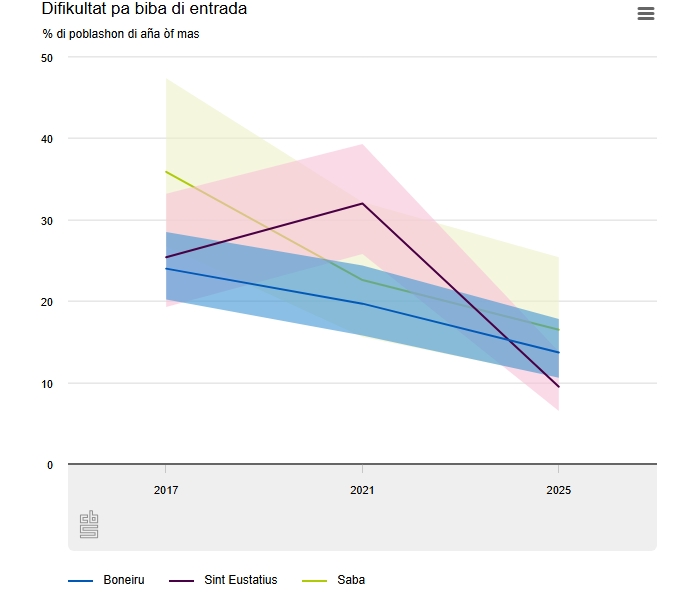
Na 2025, pa 9.5 porshento di e habitantenan di Sint Eustatius tabata (hopi) difísil pa biba di nan entrada. Na 2021, e sifra aki tabata 32.0 porshento. E proporshon di habitantenan ku ta persibí gastunan di bibienda mensual komo un peso pisá tambe a baha durante e periodo aki, di 19.4 porshento pa 6.4 porshento.
Apesar di e desaroyonan aki, e proporshon di habitantenan ku ta satisfecho ku e situashon finansiero di nan propio kas a keda meskos riba tur tres isla entre 2021 i 2025.
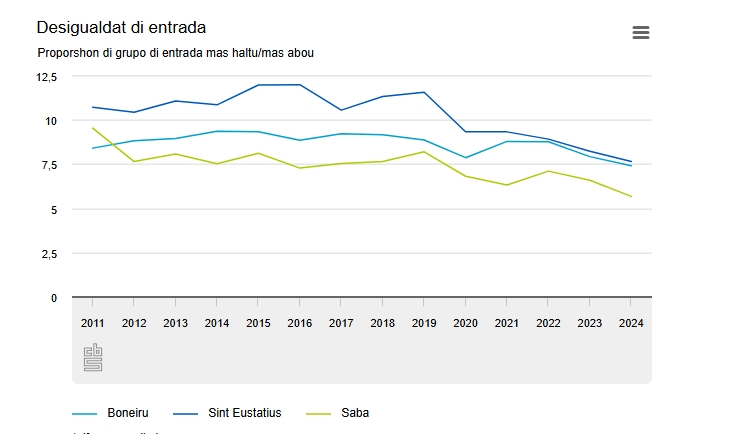
Desigualdat di entrada ta baha
Desigualdat di entrada ta bahando na Hulanda Karibense, pero ta keda mas haltu ku na Hulanda Oropeo. Por ehèmpel, na 2024, 20 porshento di kasnan ku e entradanan mas haltu a gana 6 pa 8 biaha mas tantu ku e 20 porshento di kasnan ku e entradanan mas abou. Na Hulanda Oropeo, esaki tabata 4 biaha.
Hopi biaha satisfecho ku bida, no semper satisfecho ku e kantidat di tempu liber
Na 2025, mas o ménos 90 porshento di e habitantenan di Hulanda Karibense ta duna nan bida un sifra 7 òf mas haltu. Na Sint Eustatius, esaki ta mas haltu na 93,5 porshento, siguí pa Boneiru ku 89,6 porshento i Saba ku 88,1 porshento.
Un nivel haltu di satisfakshon ku bida no ta kuadra tur kaminda ku e mesun satisfakshon pa loke ta trata e kantidat di tempu liber. Na Sint Eustatius, 82,6 porshento di habitante tabata (hopi) satisfecho ku e kantidat di tempu liber ku nan tin den 2025. Na Boneiru, esaki ta 71,0 porshento, i na Saba, 62,3 porshento.
Partisipashon laboral nèto ta mas abou na Saba ku na Boneiru i Sint Eustatius. Na 2024, esaki tabata 67,2 porshento na Saba, 71,4 porshento na Sint Eustatius, i 73,8 porshento na Boneiru.
Mas molèster na Saba
Habitantenan di Saba ta eksperensiá molèster den nan bario mas tantu ku habitantenan di e otro islanan. Na 2025, 45.8 porshento di e habitantenan di Saba a informá di a eksperensiá hopi molèster den nan bario. Na Boneiru, esaki tabata 35,7 porshento, i na Sint Eustatius, 20,2 porshento. Na Boneiru, e proporshon di habitante ku ta eksperensiá molèster ta signifikantemente mas haltu ku na 2021.
Habitantenan di Saba ta ménos satisfecho ku nan kas; 77.8 porshento di habitante tabata satisfecho. Na Boneiru i Sint Eustatius, esaki tabata 86,4 i 86,6 porshento, respektivamente.
FUENTE: CBS/LIVE99FM
NEDERLAND:
FINANCIËLE SITUATIE IN CARIBISCH NEDERLAND BETER, TEVREDENHEID HIERMEE GELIJK
De materiële welvaart in Caribisch Nederland is op verschillende onderdelen verbeterd.
Tevredenheid met de eigen financiële situatie is stabiel gebleven. Op Saba zijn inwoners minder tevreden over hun vrije tijd en woning en ervaren vaker overlast in de buurt.
Op Bonaire en Saba zijn de besteedbare inkomens gestegen in de afgelopen acht jaar. Op Sint Eustatius is de armoede afgenomen en hebben minder inwoners moeite met rondkomen. Ook is de inkomensongelijkheid op Saba en Sint Eustatius kleiner geworden. Daarnaast zijn de meeste inwoners in Caribisch Nederland tevreden over hun leven. Inwoners van Saba zijn minder tevreden over hun vrije tijd en woning en ervaren vaker overlast in de buurt. Dit blijkt uit de Monitor Brede Welvaart Caribisch Nederland 2026 van het CBS.
Brede welvaart gaat over alles wat belangrijk is voor de kwaliteit van leven van mensen, zoals gezondheid, werk en vrije tijd, inkomen, een woning en veiligheid. De monitor over Caribisch Nederland bevat cijfers over de kwaliteit van leven ‘hier en nu’ en elf van de zeventien Sustainable Development Goals (SDG’s).
Minder moeite met rondkomen en minder armoede op Sint Eustatius
De relatieve armoede schommelde in 2024 in Caribisch Nederland tussen de 19 en 23 procent. In Europees Nederland was dat 12 procent. Op Sint Eustatius neemt de armoede af. Tussen 2018 en 2024 daalden daar zowel de relatieve armoede, het inkomenstekort, als het aandeel kinderen dat in relatieve armoede leeft. In dezelfde periode stegen de doorsnee inkomens op Bonaire en Saba.
In 2025 kwam 9,5 procent van de inwoners van St. Eustatius (zeer) moeilijk rond. In 2021 was dit nog 32,0 procent. Ook het aandeel inwoners dat de maandelijkse woonlasten als een zware last ervaart, daalde in deze periode, van 19,4 procent naar 6,4 procent.
Ondanks deze ontwikkelingen is het aandeel inwoners dat tevreden is met de financiële situatie van het eigen huishouden tussen 2021 en 2025 op alle drie de eilanden gelijk gebleven.
Inkomensongelijkheid neemt af
De inkomensongelijkheid daalt in Caribisch Nederland, maar blijft groter dan in Europees Nederland. Zo verdienden in 2024 de 20 procent huishoudens met de hoogste inkomens 6 tot 8 keer zoveel als de 20 procent huishoudens met de laagste inkomens. In Europees Nederland was dit 4 keer.
Vaak tevreden met leven, niet altijd met hoeveelheid vrije tijd
In 2025 waardeert ongeveer 90 procent van de inwoners van Caribisch Nederland hun leven met een 7 of hoger. Op Sint Eustatius is dit het hoogst, met 93,5 procent, gevolgd door Bonaire met 89,6 procent en Saba met 88,1 procent.
De hoge tevredenheid met het leven gaat niet op alle eilanden samen met dezelfde tevredenheid over de hoeveelheid vrije tijd. Op Sint Eustatius is in 2025 82,6 procent van de inwoners (zeer) tevreden over de hoeveelheid vrije tijd. Op Bonaire is dit 71,0 procent en op Saba 62,3 procent.
Ook de netto arbeidsparticipatie ligt op Saba lager dan op Bonaire en Sint Eustatius. In 2024 was dit op Saba 67,2 procent, op Sint Eustatius 71,4 procent en op Bonaire 73,8 procent.
Meer overlast op Saba
Inwoners van Saba ervaren vaker overlast in hun buurt dan inwoners van de andere eilanden. In 2025 zei 45,8 procent van de inwoners van Saba veel overlast in de buurt te ervaren. Op Bonaire was dit 35,7 procent en op Sint Eustatius 20,2 procent. Op Bonaire is het aandeel inwoners dat veel overlast ervaart hoger dan in 2021.
Inwoners van Saba zijn minder tevreden met hun woning; 77,8 procent van de inwoners was tevreden. Op Bonaire en Sint Eustatius was dit respectievelijk 86,4 en 86,6 procent.
ENGELS:
MATERIAL PROSPERITY IN CARIBBEAN NETHERLANDS IS IMPROVING
Material prosperity in the Caribbean Netherlands has improved in a number of areas.
People’s satisfaction with their financial situation has remained broadly unchanged, however.
On Saba, residents are less satisfied with leisure time and their own home, and are more likely to find problems in their neighbourhood to be a nuisance.
On Bonaire and Saba, disposable incomes have risen over the past eight years. On St Eustatius, poverty has fallen and fewer people are struggling to make ends meet. Income inequality on Saba and St Eustatius has also decreased. Furthermore, most residents of the Caribbean Netherlands are satisfied with their lives more generally. Residents of Saba are less satisfied with their leisure time and their own home, and are more likely to find problems in their neighbourhood to be a nuisance. This is according to CBS’s Monitor of Well-being for the Caribbean Netherlands 2026.
The concept of inclusive and sustainable well-being encompasses everything that plays a role in people’s quality of life, such as health, work and leisure time, income, housing and safety. The report on the inclusive and sustainable well-being in the Caribbean Netherlands includes figures on quality of life ‘here and now’ as well as eleven of the seventeen Sustainable Development Goals (SDGs).
Fewer people have difficulty making ends meet, and less poverty on St Eustatius
The share of people at risk of poverty fluctuated between 19 and 23 percent in the Caribbean Netherlands in 2024. In the European Netherlands, the figure was 12 percent. The number of people living in poverty on St Eustatius decreased. Between 2018 and 2024, the at-risk-of-poverty rate, the income gap and the proportion of children at risk of poverty all fell on the island. Over the same period, average incomes rose on Bonaire and Saba.
In 2025, 9.5 percent of the residents of St Eustatius found it (very) difficult to make ends meet. That compares to 32.0 percent in 2021. The share of residents who regard their monthly housing costs as a heavy burden also fell during this period, from 19.4 percent to 6.4 percent.
In spite of this, the proportion of residents who were satisfied with their own household’s financial situation remained unchanged on all three islands between 2021 and 2025.
Income inequality is falling
Income inequality in the Caribbean Netherlands has fallen, but remains more pronounced than in the European Netherlands. In 2024, for example, the top 20 percent of households by income earned between 6 and 8 times as much as the lowest 20 percent of households. By comparison, the difference in the European Netherlands was only four times.
Lower satisfaction with leisure time
Around 90 percent of people in the Caribbean Netherlands gave their own quality of life a score of 7 or higher in 2025. The figure is highest on St Eustatius, at 93.5 percent, followed by Bonaire at 89.6 percent and Saba at 88.1 percent.
But the high scores on life satisfaction do not extend to satisfaction with the amount of free time, or at least not on all the islands. In 2025, 82.6 percent of people on St Eustatius were (very) satisfied with the amount of leisure time they had. On Bonaire, this was 71.0 percent, and on Saba it was 62.3 percent.
The net labour participation rate is lower on Saba than on Bonaire and St Eustatius. In 2024, it stood at 67.2 percent on Saba, 71.4 percent on St Eustatius and 73.8 percent on Bonaire.
More people on Saba report problems in their neighbourhood
Residents of Saba experience problems in their neighbourhood (ranging from noise nuisance to antisocial behaviour) more frequently than residents of the other islands. In 2025, 45.8 percent of people on Saba said that they found such problems to be a significant nuisance in their neighbourhood. On Bonaire, the share was 35.7 percent, and on St Eustatius it was 20.2 percent. The share of people on Bonaire who found such problems to be a nuisance was higher than it was in 2021.
People on Saba are less satisfied with their own homes than residents of the other two islands. On Saba 77.8 percent of residents were satisfied, while on Bonaire and St Eustatius, the share was 86.4 percent and 86.6 percent, respectively.



GIPHY App Key not set. Please check settings